We explain, without legal jargon, how customs clearance works in Uzbekistan: where a parcel from Russia is cleared, who files the declaration, what documents are prepared and what payments depend on.
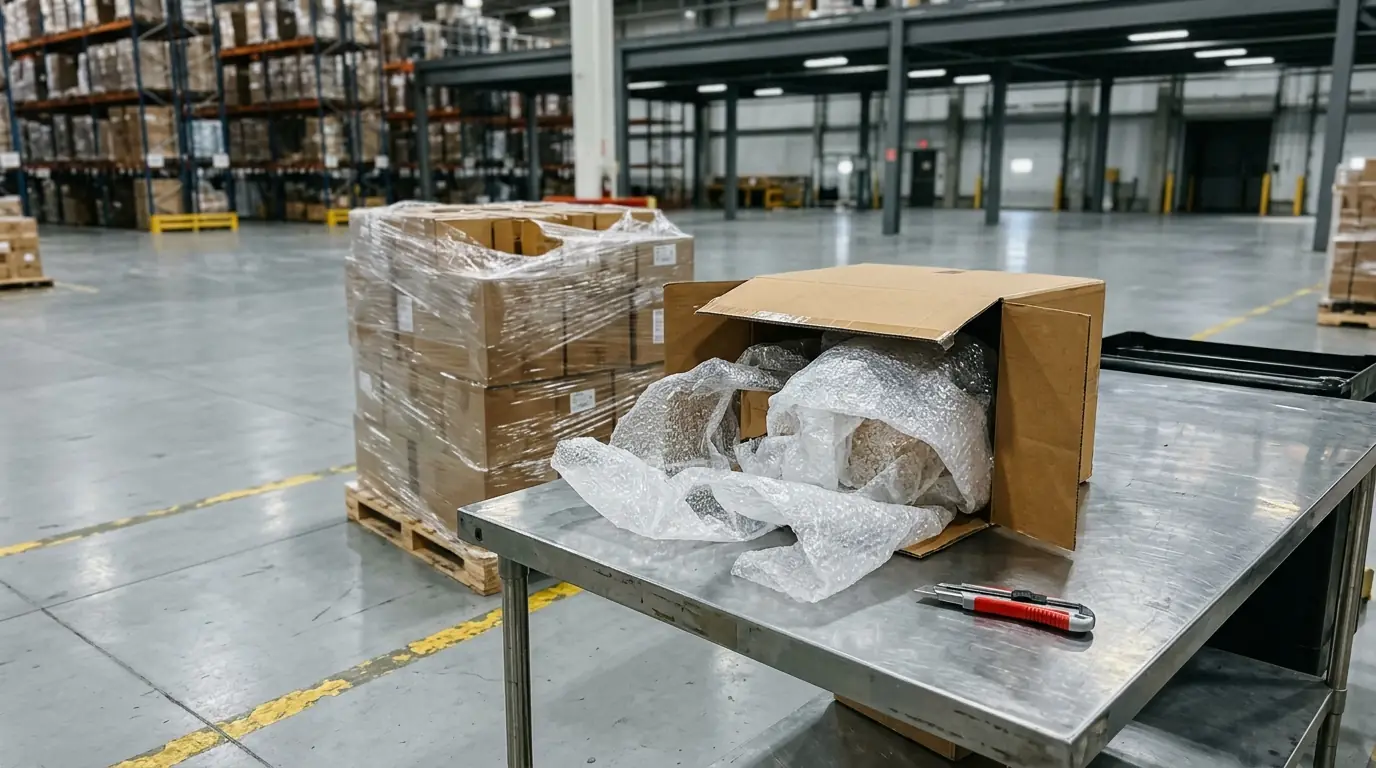
Customs clearance is the process in which the cargo is described in a declaration, customs checks the documents and, if needed, the contents themselves, calculates any payments and releases the cargo to the recipient.
A parcel flown from Moscow to Tashkent is cleared on arrival, while trains and trucks travel through Kazakhstan and go through control on entering Uzbekistan. Russia and Kazakhstan are members of the Eurasian Economic Union, while Uzbekistan is not, so at this border the cargo moves into a different customs territory.
We'll explain how the process works in general. Specific limits, rates and requirements are set by Uzbek law, and we don't comment on them.
In short
- Where it's clearedAir cargo at the arrival airport; train and truck cargo on entry into Uzbekistan or at the destination customs post.
- Who declaresA private individual's parcel is described by the sender; a commercial shipment is cleared by the recipient or a customs representative.
- What mattersAn accurate inventory and the real value. Limits and duties change, so they are checked as of the shipping date.
Customs clearance in Uzbekistan: where and when it takes place
Where clearance takes place depends on the transport, and so does how much of the total delivery time it takes up.
Choose a type of transport to see the time in transit and the stage at which the cargo goes through customs.
Transit times and estimated starting rates, Moscow ↔ Tashkent. YolEx data, November 2026.
- 10–24 hrsin transit
- from $13.2per kilogram
Screening on departure from Moscow, customs clearance at Tashkent airport after arrival.
- ~4 daysin transit
- from $6per kilogram
Transit through Kazakhstan, clearance on entry into Uzbekistan or at the destination station.
- 10–15 daysin transit
- from $4.2per kilogram
Transit through Kazakhstan, control at the border checkpoint and clearance at a customs post.
The control itself usually takes less time than the journey. But if there are inaccuracies in the documents or the contents need a separate check, the cargo waits for a decision at the customs warehouse. For a commercial shipment, clearance starts back in Russia: goods leaving the Eurasian Economic Union are cleared for export. For a private parcel with personal belongings this stage is simpler, but an inventory of contents is still needed.
Learn more about how clearance affects transit times in the article on how long a parcel takes to reach Uzbekistan.
How a private individual's parcel differs from a commercial shipment
Customs looks not at what you call the shipment but at its contents: the quantity, uniformity and value of the items.
A parcel for personal use (gifts, clothing, things for the family) goes through simplified clearance. A commercial shipment, meaning goods for sale or business use, goes through full declaration.
| Type of shipment | Who declares | Main documents | What to keep in mind |
|---|---|---|---|
| Private individual's parcel | The sender describes the contents; the recipient pays any charges if required | Inventory of contents with values, sender and recipient details | Duty-free import limits are set by law, and they change |
| Commercial shipment | The consignee in Uzbekistan or a customs representative acting on their behalf | Contract, invoice, packing list, waybill, permits | Payments depend on the type of goods and their value |
| Samples and trial shipments | Generally, as commercial cargo | Documents for the goods; additional ones for food and medical products | Sanitary or other control is possible |
← Swipe to scroll the table →
The line between “personal” and “commercial” isn't always obvious. Customs may treat ten identical jackets in one box as goods, even if the sender is taking them to relatives. The criteria are set by law, so in borderline cases it's best to ask a logistics manager in advance.
The same goes for regular shipments. If you send similar boxes to Uzbekistan every week, customs may take note of the frequency and volume. When shipments become part of a business, it's easier to clear them as commercial shipments from the start.
What documents you need for customs clearance of cargo in Uzbekistan
The set of documents depends on the cargo, but the principle is the same: the papers must match each other and what's in the box.
- Documents for customs
- Commercial: contract, invoice, packing list
- Transport: the carrier's waybill
- Air waybill for a plane
- Rail waybill for a train
- International CMR consignment note for a truck
- Permits: certificates and approvals, if required for the goods
- For a private parcel: inventory of contents and details of both parties
An invoice is the seller's bill listing the goods, their quantity and value. A packing list shows what's in each package of the cargo and how much it weighs. Customs checks these documents against the declaration and, during inspection, against the cargo itself.
Common reasons for questions at customs are small mismatches: the invoice shows one number of packages and the warehouse another, the recipient's name is spelled differently, the weight on the waybill doesn't match the actual weight. Each discrepancy requires an explanation, and the cargo waits in the meantime.
That's why it's best to collect and cross-check the documents before the cargo is picked up in Moscow, not after it arrives in Tashkent. Both the sender and the recipient should keep copies at hand.
Food products, medicines, plants and a number of other goods require additional documents and checks. We cover which contents are restricted in the article on what you can't send to Uzbekistan.
Duty on parcels to Uzbekistan: what payments depend on
We don't quote limits or rates: they are set by Uzbek law and are revised from time to time. Check the conditions as of the shipping date.
The amount of customs payments is determined by customs. Several factors affect it, and for the same item the result may differ depending on whether it travels in a personal parcel or in a commercial shipment.
General outline without rates. Rates and limits are set by law.
For commercial shipments, the type of goods is determined by the commodity nomenclature code, a classification customs uses to assign goods to a group with specific rates and requirements. For private parcels, the value and nature of the contents matter.
If payments are due, they are paid before the cargo is released. It's best to agree in advance who pays, the sender or the recipient, so that the parcel doesn't sit in the customs warehouse while the parties sort it out.
What's important to follow:
- state the real value of each item;
- describe the contents in full, without “miscellaneous” or “other”;
- don't split a shipment into parts to get around limits: this is a violation that leads to cargo delays and penalties;
- before shipping, check the current conditions with a logistics manager or the customs service of Uzbekistan.
How YolEx helps with customs clearance in Tashkent
Customs assistance is a separate YolEx service: a logistics manager prepares the cargo for clearance so that no unnecessary questions come up at the border.
Click a step to see the details.
Contents check
The logistics manager confirms what's going in the parcel or shipment and warns you if the contents are restricted or require documents.
Inventory and documents
We help you draw up the inventory and check that the invoice and packing list match the cargo.
Packing and labeling
Each package is labeled so it can easily be checked against the documents during inspection.
Clearance support
The logistics manager stays in touch during the customs stage and lets you know if a document or explanation needs to be provided.
Release and delivery
After release, the cargo is delivered to the recipient in Tashkent or another city in Uzbekistan.
For example, we delivered food flavoring samples from Moscow to Tashkent in 4 days instead of the expected 7: we prepared the documents for sanitary and customs control in advance and handed the cargo to the recipient right after clearance.
Customs assistance can be added to any shipment; see the full list in the YolEx services section. Describe your cargo in the delivery calculator, and a logistics manager will tell you which documents you'll need.
Important
This article explains the general procedure and is not legal advice. Limits, duty rates and document requirements are set by law, and they change. Check the current conditions for your cargo with a logistics manager or the customs service of Uzbekistan.