Here is what cargo insurance protects you from in transit, how the insured amount is determined, which cases are usually not covered and what to do if your cargo arrives damaged.
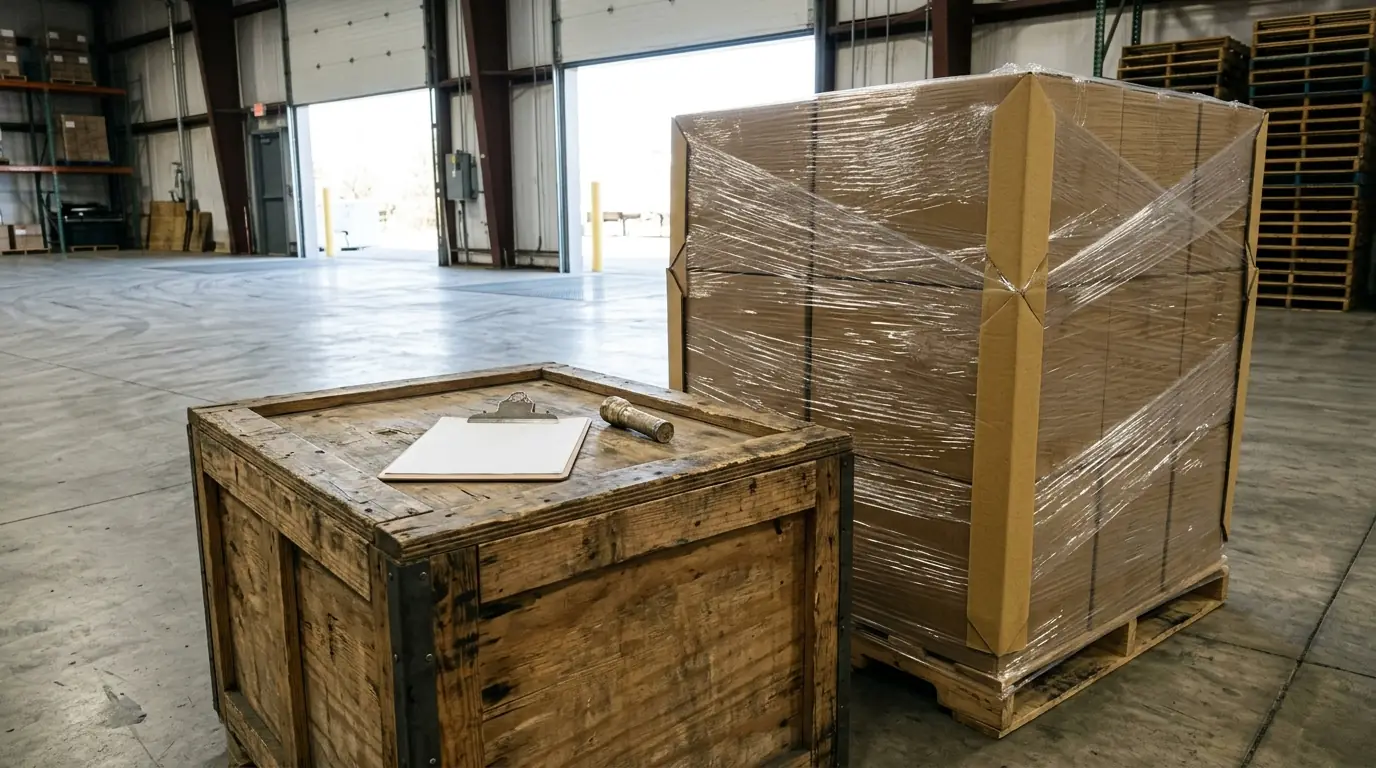
Cargo insurance protects you against financial loss if cargo is damaged, lost or stolen in transit. It doesn't make the shipment itself any safer, but it lets you receive compensation under the terms of the insurance contract.
On an international route, the risk grows with the length of the journey and the number of transshipments. A truck from Moscow to Tashkent travels 10–15 days in transit through Kazakhstan, with loading, stops and two border crossings, which is a good reason to think about insurance in advance for valuable cargo.
Below are the general principles. The specific risks, exclusions and cost of insurance are set by the contract, and the logistics manager states them when calculating the cost.
In short
- What it coversUsually damage, loss and theft of cargo in transit, within the terms of the policy.
- How the amount is setBased on the actual value of the cargo, confirmed by documents: an invoice, receipts or a packing list.
- When you need itFor electronics, equipment, commercial shipments and valuable personal belongings, especially on long routes.
What cargo insurance covers in transit
Insurance reimburses the value of damaged or lost cargo if the case is provided for in the contract. Without it, compensation is limited to the carrier's liability, which may not cover the full value of the cargo.
A policy usually applies along the entire route, from acceptance of the cargo to delivery to the recipient. The set of risks depends on the program you choose: some cover only total loss of the cargo, others cover partial damage as well.
- DamageBreakage, dents, water damage during loading and in transit
- LossLoss of the entire cargo or individual pieces
- TheftTheft of the cargo or part of the contents
- Incidents in transitVehicle accident, fire, natural events
- Transshipment and warehousesRisks during handling and storage, if included in the terms
- Exact listOnly in the terms of a specific policy
How does insurance differ from carrier liability? The carrier is responsible for the cargo within limits set by the contract of carriage and by law, and those limits may be lower than the actual value of the contents. Insurance covers the difference: compensation is calculated from the insured amount, not from the carrier's limits.
Insurance for a parcel of personal belongings and insurance for a commercial shipment work on the same principle. The difference lies in the documents that confirm the value and in the amount it makes sense to insure.
How the insured amount is determined
The insured amount is the limit within which compensation is paid. It is based on the actual value of the cargo, confirmed by documents.
For a commercial shipment, the basis is the invoice, the supplier's bill listing the goods and their value. For personal belongings and parcels, it is a packing list with a valuation of each item, plus receipts if you still have them.
A detailed packing list matters for more than paperwork. When part of the cargo is damaged, it is used to determine how much the damaged piece itself was worth.
Hypothetical example. The final compensation is determined by the policy terms.
If the pieces are different and the list shows only a total amount, establishing the loss is harder: you will have to prove the value of the damaged item separately. That is why, for mixed shipments, the value is listed for each piece.
Keep the documents that confirm the value until the shipment is complete and any claim has been settled. Without them, the insured amount will be hard to justify, even if the damage is obvious.
The value must match across the packing list, customs documents and the policy. Understating it doesn't pay: compensation is usually calculated from the declared amount, and discrepancies in the documents will raise questions both at the border and with the insurer.
What is usually not insured
Every insurance policy has exclusions. Most often these are cases where the damage was caused not by the transportation but by the cargo itself, its preparation or its paperwork.
| Situation | Usually covered? | What to keep in mind |
|---|---|---|
| A box was damaged during loading, the contents are broken | As a rule, yes | You need photos and a note of the damage at handover |
| The cargo or part of it was lost in transit | As a rule, yes | Compensation is within the insured amount |
| Damage due to poor packing by the sender | Often not | Many policies exclude inadequate packing |
| Natural properties of the cargo: spoiled food, shrinkage | Often not | Perishables are insured on special terms or not at all |
| Cargo held at customs on import to Uzbekistan | Usually not | A delay is not damage; prepare the documents in advance |
| Lost profit due to late delivery | Usually not | The cargo itself is insured, not indirect losses |
| Prohibited contents or contents not listed in the documents | As a rule, no | Cargo shipped in breach of the rules is not protected |
← Swipe to scroll the table →
Hidden damage is a separate case, when the box is intact but the item inside is broken. It is harder to prove that this happened in transit, so electronics and fragile items should be checked immediately on receipt, not a few days later.
Insurance is no substitute for packing: in a disputed case, the first thing checked is how the cargo was prepared. For how to protect your things so it never comes to a dispute, see our article on how to pack cargo for shipping.
When parcel and cargo insurance is especially important
Insurance makes sense when losing the cargo would hurt your budget or business, and the route is long with transshipments.
When it is worth insuring cargo:
- appliances, electronics and instruments;
- equipment and spare parts that a business depends on;
- a commercial shipment paid to the supplier in advance;
- fragile items: glass, furniture, home decor;
- personal belongings during a move, when almost everything you own goes in one shipment.
The risks also depend on the transport. Look at how long cargo spends in transit on the Moscow — Tashkent route.
Moscow ↔ Tashkent transit times by mode of transport. YolEx data, November 2026.
- 10–24 hin transit
- from 10 hexpress shipping
A short journey, but the cargo is handled at two airports. Small but valuable cargo is what usually goes by plane, and that is what gets insured.
- ~4 daysin transit
- 2 borderstransit through Kazakhstan
Vibration in the railcar and tight stowage: the risk of damage to electronics and fragile items is higher than by plane.
- 10–15 daysin transit
- 2 borderstransit through Kazakhstan
The longest journey: stops, temperature swings, heavy shipments. For valuable and large cargo, insurance is especially appropriate here.
Pay attention to the season, too. In winter, on the overland route through Kazakhstan, cargo spends several days at low temperatures, and the risk of damage is higher for liquids and sensitive electronics. It is best to discuss such cargo with the logistics manager in advance: choosing the plane may be more reliable than simply insuring the risk.
For inexpensive items that are easy to replace, insurance may be unnecessary. The decision is up to the sender, and the logistics manager will help you judge whether a particular shipment is worth insuring.
What to do if your cargo arrives damaged
The key is to record the damage at the moment of receipt, before the cargo is taken away and fully unpacked.
Tap a step to see the details.
Inspect the cargo on receipt
Check the number of pieces, the condition of the packaging, signs of tampering, dents and water damage.
Take photos
Of the packaging from all sides, the labels, the filler and the damaged items, before anything is moved.
Put it in writing
Ask for the damage to be noted on the delivery document or for a damage report to be drawn up.
Keep everything
Don't throw away the packaging, filler or damaged cargo until the claim is decided.
Notify the logistics manager
Immediately and within the time limits stated in the shipping and insurance terms.
Prepare the documents
The packing list or invoice, receipts, photos, the damage report and correspondence: these are used to determine the amount of compensation.
If the cargo is received not by the sender but, for example, by a relative or partner in Tashkent, explain this procedure to them in advance. The recipient should know how many pieces are in the shipment and should not sign the receipt document without inspecting them.
The photo report that YolEx sends on request from loading and unloading helps establish at what stage the damage occurred. To insure your cargo, tell the logistics manager the value of the contents when you submit a request through the calculator; they will give you the insurance terms together with the delivery quote. The service is part of the list of YolEx additional services.
Important
The list of risks, exclusions and the cost of insurance depend on the cargo, route, transport and the terms of the insurance program. This article describes general principles and does not replace the terms of the contract. The logistics manager confirms the exact terms when calculating the cost.