We explain what cargo delivery is, how Moscow–Tashkent cargo works, how it differs from a postal parcel and why official clearance matters more than a low price.
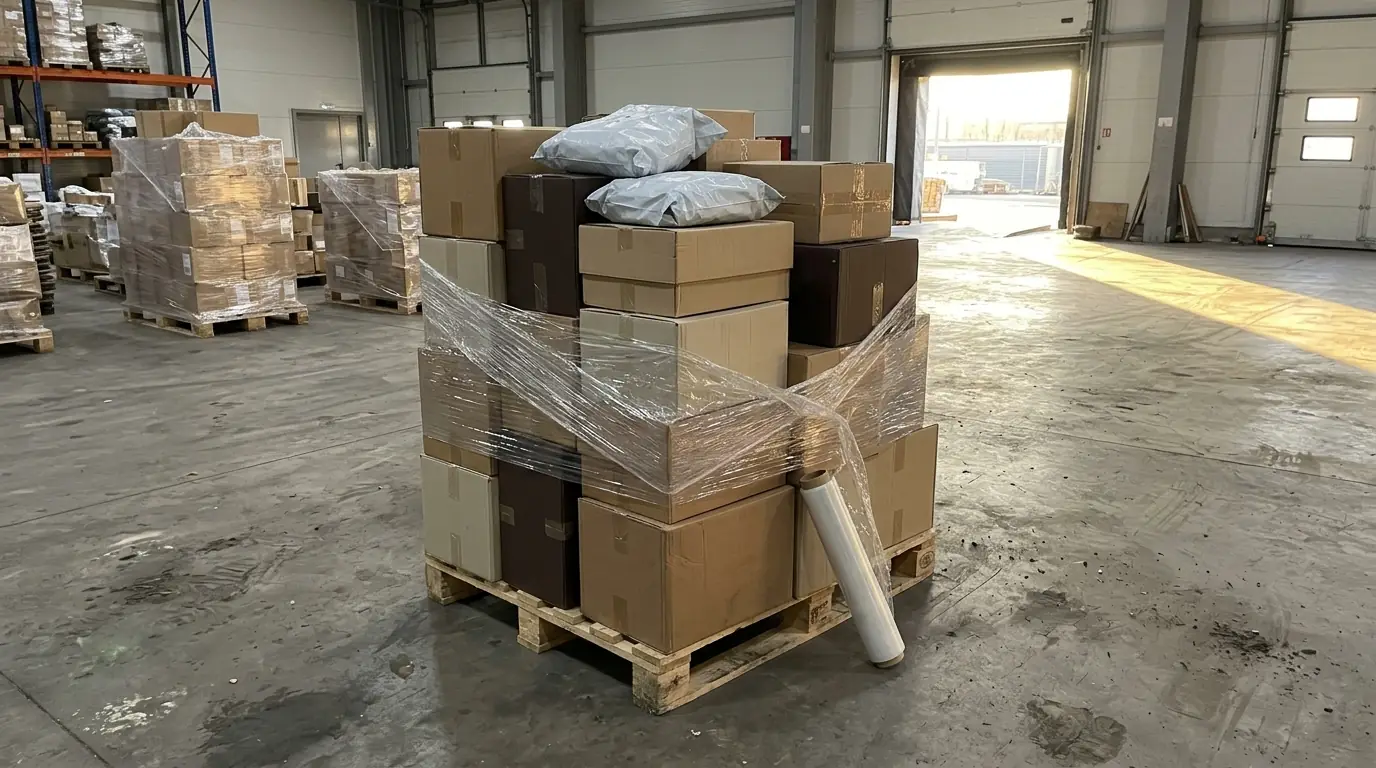
In Russian-speaking countries, “cargo” (kargo) is the common name for turnkey delivery of goods and parcels by a logistics company: it picks up the cargo from the sender, packs it, transports it, helps with paperwork and delivers it to the recipient.
On the Moscow–Tashkent route, cargo works by plane, train and truck. Trains and trucks travel in transit through Kazakhstan, so the price and delivery time include both the trip through a third country and customs control on entry into Uzbekistan.
Let's look at how cargo works, how it differs from the postal service and how to tell official clearance from schemes that save money at the cost of risk.
In short
- What cargo isTurnkey delivery: pickup, packing, transport, help with customs and delivery, all handled by one company.
- How it differs from the postal serviceNo strict size limits, plus door pickup, contact with a logistics manager and commercial shipments.
- What to look forOfficial clearance: a contract, an inventory, documents and cargo insurance.
What cargo delivery is and how cargo to Uzbekistan works
The main difference with cargo is a single provider for the whole journey. The sender does not have to find packing, a carrier and someone to help at the border separately.
With cargo, shipments from different senders often travel together in one truck, railcar or flight. This is consolidated cargo: each sender pays only for their own weight and volume, not for the whole vehicle.
YolEx has warehouses in Moscow and Tashkent. At the warehouse the cargo is accepted, repacked if necessary and stored until shipping, and in Tashkent it is stored until it is delivered to the recipient. Cargo services carry parcels and documents, personal belongings, medicines and dietary supplements, auto parts, equipment and commercial shipments.
Tap a stage to see the details.
Request and quote
You describe the cargo, and the logistics manager suggests the transport, delivery time and cost.
Cargo pickup
The cargo is picked up from an address in Moscow, or you bring it to the warehouse.
Warehouse and packing
The cargo is packed, labeled and added to a shipment by plane, train or truck.
Transport and clearance
The cargo travels to Tashkent and goes through customs control, and the logistics manager helps with the documents.
Delivery
The recipient picks up the cargo at the warehouse in Tashkent or receives it at their address.
How consolidated shipments work and why they are cheaper than a dedicated truck is covered in detail in our article on consolidated cargo to Uzbekistan. YolEx's general workflow is described in the “How we work” section.
How cargo differs from the postal service
The postal service and cargo solve different problems. The post is convenient for small parcels; cargo is for anything that does not fit postal limits on weight, size or urgency.
| Feature | Postal service | Cargo, for example YolEx |
|---|---|---|
| How to drop off | Bring it to a post office | Pickup from your address or drop-off at the warehouse in Moscow |
| Packing | Done by the sender | Can be left to the company |
| Weight and size | Limits per shipment | From a single box to large shipments |
| Commercial cargo | Limited | Yes, with documents for the goods |
| Transport and delivery time | Decided by the service | Your choice: plane, train or truck Moscow–Tashkent |
| Contact in transit | Tracking number | A logistics manager in touch, photo report on request |
← Swipe to scroll the table →
The postal service remains a convenient option if the parcel is small, the post office is nearby and timing does not matter. Cargo wins when there are several boxes, the items are heavy or fragile, and the recipient in Tashkent needs the parcel by a specific date.
If you want to compare all the options at once, including the postal service, courier services and cargo, see our article on how to send a parcel from Russia to Uzbekistan.
Official cargo vs. schemes without clearance: what is the difference
Under the name “cargo”, some offer transport without an inventory or documents. It only looks cheaper until the first inspection at the border.
Official cargo means the cargo is described, declared and travels with documents, and the company is responsible for its safety under a contract. Schemes without clearance rely on the cargo crossing the border under a description or value that is not its own.
- An inventory and the real value of the contents
- Documents for customs and for business
- Cargo insurance
- Clear liability of the provider
- The cargo may be detained or seized during inspection
- No documents to prove the goods were purchased
- Insurance is impossible or does not apply
- No one to hold accountable for a loss
How to tell that cargo is cleared officially:
- the company states the terms of carriage and liability before shipping;
- it asks for an inventory of contents with their real value;
- it explains which documents your cargo needs;
- it offers cargo insurance;
- it does not promise to “get through any customs” and does not suggest understating the value.
For private parcels, the risk is losing the item and the money. For businesses the consequences are more serious: without documents the goods cannot be sold legally, and there will be no one to pay compensation for lost cargo.
A separate case is sending items “with a fellow traveler” in their luggage. A person carrying someone else's bag is personally responsible for its contents at customs, and if an item is lost or turns out to be restricted for import, getting it back or receiving compensation will be difficult. For other people's belongings and for goods, a properly documented shipment is safer.
YolEx works only officially: cargo is cleared according to its real contents and value, and help with customs is part of our services.
Who Moscow–Tashkent cargo is for
People choose cargo when door pickup, non-standard cargo or an exact delivery date matters.
Cargo is especially convenient for:
- Private senders: personal belongings, gifts, moving, when there are many boxes or they are heavy.
- Entrepreneurs: commercial and consolidated shipments that need documents and insurance.
- People in a hurry: express air freight can be arranged from 10 hours.
- Senders of complex cargo: medicines and dietary supplements, auto parts, equipment that require special packing.
- Those who ship both ways: cargo also works from Tashkent to Moscow.
For example, we shipped 560 kg of vacuum cleaners by train from Moscow to Tashkent in 4 days, 3 days earlier than the recipient expected. Other examples of private and commercial deliveries are collected in the YolEx case studies section.
Cargo also suits those who need to ship not to Tashkent but to another city in Uzbekistan, such as Samarkand: from Moscow it can be delivered there by train from 4 days. The logistics manager gives delivery times to other cities with the quote.
How much cargo to Uzbekistan costs and how long it takes
The cargo price is calculated per kilogram and depends on the transport: the faster the delivery, the more expensive each kilogram.
Preliminary YolEx rates for Russia ↔ Uzbekistan: by plane from $13.2/kg in 10–24 hours, by train from $6/kg in about 4 days, by truck from $4.2/kg in 10–15 days. Here is how the price adds up in a hypothetical example.
Hypothetical example. Rate: YolEx data, November 2026, excluding packing, insurance and door delivery.
The same cargo would cost about $396 by plane (30 × $13.2) and $126 by truck (30 × $4.2). If the cargo is light but bulky, the price may be calculated by volumetric weight, that is, by its dimensions.
Additional services may be added to the transport cost: reliable packing, cargo insurance, pickup from your address and door delivery. You choose them as needed: insurance for valuable items, packing for fragile and heavy ones.
The logistics manager quotes the exact cost after calculating it. The cargo delivery calculator will show an estimated amount: enter the weight, dimensions and what you are shipping. If you are not sure which transport to choose, select “Suggest the best option”.
Important
Delivery times and rates are preliminary and current as of the update date. They depend on the weight and volume of the cargo, the shipping date, customs clearance and weather. Customs rules are set by law: check the current terms with the logistics manager.