We take a close look at air freight to Uzbekistan: what makes up the hours in transit from Moscow to Tashkent, what can't go by plane, how to avoid losing time at acceptance and when the high rate pays for itself.
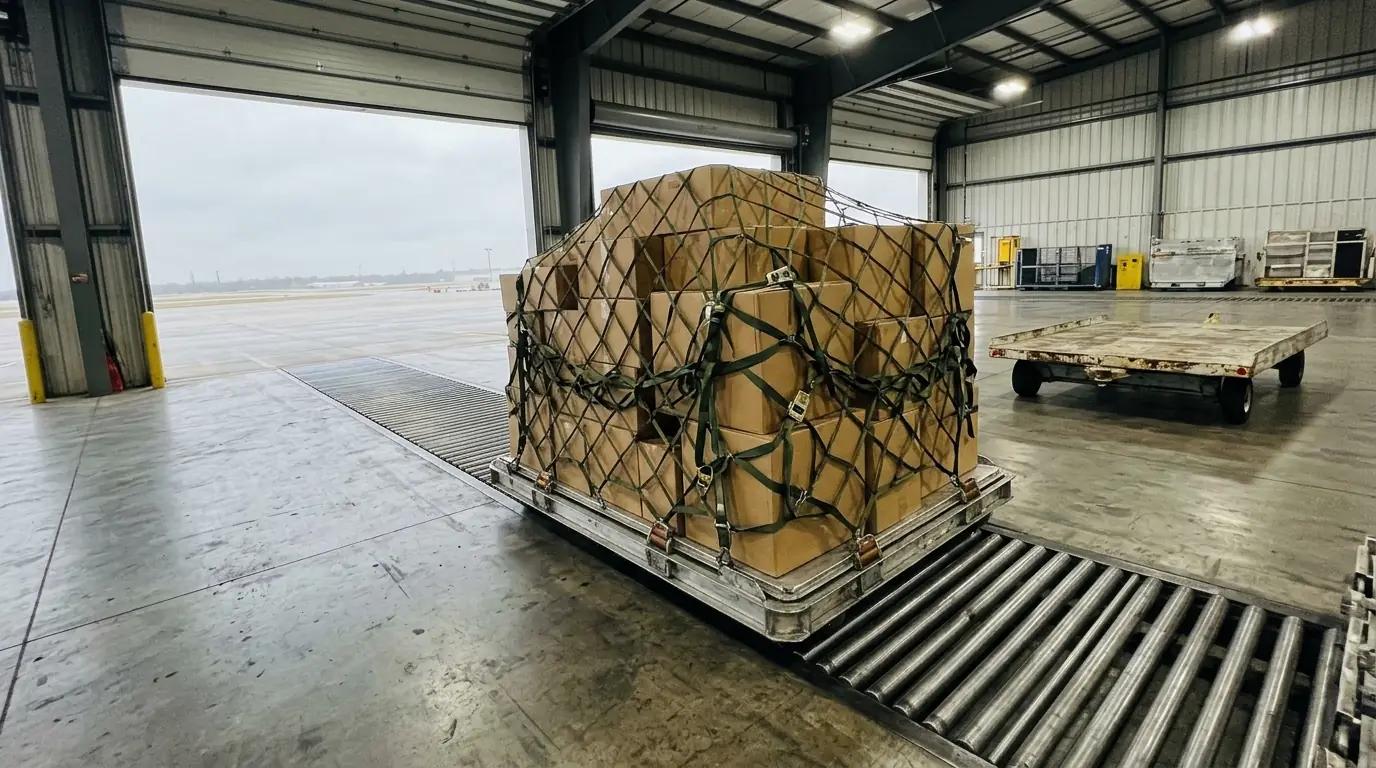
Air freight is the fastest way to send cargo from Russia to Uzbekistan. Moscow and Tashkent are connected by direct flights, so the cargo doesn't travel in transit through Kazakhstan like a train or truck and doesn't cross two land borders.
That's the main advantage: the cargo reaches the recipient in Tashkent in 10–24 hours, and with express shipping in as little as 10 hours. The main drawback is just as clear: each kilogram costs noticeably more than on the ground.
Below we explain how those hours add up, what can and can't be sent by plane and how to tell whether speed is worth the money in your case.
In short
- How long it takesMoscow to Tashkent: 10–24 hours from pickup to delivery, express from 10 hours.
- How much it costsEstimated from $13.2 per kg. For light, bulky cargo, the price is based on dimensions.
- When it pays offWhen a late delivery costs more than the difference with the train: urgent equipment, documents, medicines.
How long Moscow to Tashkent air freight takes and how much it costs
The flight itself takes a few hours. The rest of the time goes to pickup, packing, paperwork and cargo acceptance at the airport, and this is where a day either shrinks to 10 hours or stretches out.
Estimated transit times and starting rate, Russia ↔ Uzbekistan. YolEx data, November 2026.
- 10–24 hrsstandard time from pickup to delivery
- from 10 hrswith express shipping
- from $13.2per kilogram
For comparison: by train the same cargo takes about 4 days, by truck 10–15 days. A plane saves about three days over a train and up to two weeks over a truck.
Planes carry more than envelopes and boxes. Our shipments include 120 kg of personal belongings for a move, delivered in 18 hours, and 120 kg of flat-pack furniture, delivered in 24 hours. The limit here isn't weight but the balance between urgency and budget: the larger the shipment, the more noticeable the difference from the train.
The price is based on the greater of two values: actual weight or volumetric weight, a calculated weight based on dimensions. This matters especially for air freight: space on a plane is limited, and a large light box costs as much as a heavy one. We explain how to do this calculation yourself in the article on calculating delivery cost and volumetric weight.
The cargo's journey by plane: from an address in Moscow to the recipient in Tashkent
Air freight transit time is counted from the moment the cargo is picked up to the moment it's delivered. Each stage can be sped up or drawn out.
- MoscowCargo pickup from your address or drop-off at the warehouse
- WarehousePacking, labeling packages, documents
- AirportCargo acceptance and screening
- FlightMoscow to Tashkent flight
- TashkentClearance and delivery to the recipient
The “longest” stages are cargo preparation and paperwork. If the inventory is incomplete or the packing isn't suitable for air transport, the cargo is repacked and flies on the next flight.
In Tashkent, the cargo is met and, after clearance, taken to the recipient's address. Clearance time depends on what the cargo is and how the documents are prepared. Customs rules for commercial shipments and private consignments are set by Uzbek law, and they change, so a logistics manager checks the current requirements before departure.
That's how the delivery of original documents to Tashkent in 12 hours worked: a courier picked up the package on the day of the request, the envelope was sealed with security tape and sent on the next flight, and in Tashkent it was handed to the recipient in person.
When a plane pays off over a train or truck
A plane pays off not when it's cheaper, but when a late delivery costs more than the difference in shipping price.
A simple way to decide: work out what three extra days without the cargo would cost you. An idle crew, a postponed deal, an empty store shelf, a patient without medicine: if the total exceeds the difference between the rates, air freight pays for itself.
Hypothetical example: 50 kg of spare parts for a production line that has stopped. By plane, from $660 (50 × $13.2); by train, from $300 (50 × $6). If each day of downtime costs more than $120, three days of waiting for the train cost more than the $360 difference, and the plane is the better deal.
- JustifiedUrgent equipment, documents, medicines, valuable low-weight cargo
- Do the mathMid-sized shipments needed “sooner rather than later” but without a firm date
- Not worth itHeavy shipments, liquids in containers, scheduled deliveries to a warehouse
| Situation | Why a plane | Alternative |
|---|---|---|
| Equipment for a launch in Tashkent | Without it, installation or an event is on hold, and every hour counts | None, if there are fewer than 4 days until the date |
| Original documents | Minimal weight, and a deal is waiting to be signed | Practically none |
| Medicines with storage requirements | A short journey makes it easier to maintain the required conditions | Train, for drugs without strict temperature requirements |
| A shipment of appliances for a warehouse | Usually not needed: speed doesn't justify the difference | Train in about 4 days or truck in 10–15 days |
← Swipe to scroll the table →
A good example of the first row is the case study on air freight of 300 kg of lighting equipment in 20 hours. The requirement was no more than a day from pickup, and neither a train nor a truck could meet it.
For medicines that need a temperature of +2 to +8 °C, we use a medical thermal box with cold packs. In the case study on a temperature-sensitive drug, the cargo was in Tashkent 16 hours later, and the temperature was maintained the whole way.
What you can't send by plane to Uzbekistan
Air transport rules are stricter than on the ground: something that travels by train without issue may be refused on a plane or accepted only with special paperwork.
What is refused or accepted only under special rules:
- Explosive and flammable substances: fuel, solvents, some paints and varnishes.
- Gases and aerosols: spray cans, lighters, pressurized cylinders.
- Lithium batteries: whether separate or inside devices, they fly only in compliance with packing and paperwork rules.
- Toxic and corrosive substances: some household chemicals, acids, alkalis.
- Weapons, ammunition and narcotic substances: not accepted for shipping.
Liquids are a separate issue: perfume, cosmetics, food concentrates. Many of them are allowed on air freight but require sealed containers and an accurate description. The more detail you give about the contents in your request, the lower the risk that the cargo will be stopped at screening.
The full list of dangerous goods is defined by international air transport regulations and by the airlines themselves, and for import by Uzbek law. If your cargo includes devices with batteries, liquids or chemicals, tell the logistics manager in your request: they'll tell you whether the cargo can go by plane or whether it's safer to choose the train.
How to speed up express delivery to Tashkent
The most common reason cargo misses the next flight isn't the weather or the airport but incomplete information in the request.
Click a step to see the details.
Describe the cargo accurately
What's inside, how many packages, the weight and dimensions of each. With this information, a logistics manager can immediately check whether the cargo can go by plane.
Prepare documents before pickup
For a commercial shipment, documents for the goods; for personal belongings, an inventory with approximate values.
Pack for air transport
A rigid box, empty spaces filled, fragile items packed separately. If you're not sure, order packing from us: it's faster than repacking at the airport.
Flag tricky contents
Batteries, liquids and medicines require a separate check, and it's better to do it in advance than at screening.
Keep the recipient reachable
In Tashkent, the cargo is delivered right after clearance. If the recipient doesn't answer, delivery is rescheduled.
The earlier the cargo is ready on the day of shipping, the better the chance of making the next flight. Enter the weight, dimensions and desired transit time to calculate the cost of air freight in the calculator, and a logistics manager will contact you on Telegram or by email and suggest a flight.
One more small detail that saves hours: labeling your packages. If you're sending several boxes, number them and state the total count: packages are counted at acceptance and release, and any mix-up delays the whole shipment.
If you're not sure about urgency, compare the options in our overview plane, train or truck for Moscow to Tashkent cargo.
Important
The transit times and rates in this article are estimates as of the update date. They depend on the weight and dimensions of the cargo, flight schedules and load, customs clearance and the weather. A logistics manager gives you the exact transit time and cost after calculating the quote.